GPT-5.6 and ChatGPT Work: From AI Assistant to AI Worker
OpenAI is no longer positioning ChatGPT as a conversational assistant. With GPT-5.6 and ChatGPT Work, the company is moving toward a full work execution layer across apps, files, code, and business workflows.
OpenAI has introduced GPT-5.6 and ChatGPT Work, marking one of the company’s clearest moves yet from conversational AI toward agentic productivity. The announcement is not only about a stronger model. It is about a new product architecture: AI that can stay with a project for hours, gather context from connected tools, produce finished artifacts, and operate across desktop, web, and enterprise workflows.
According to OpenAI, GPT-5.6 is now generally available across ChatGPT, Codex, and the OpenAI API, with three model tiers: Sol, the flagship model; Terra, a balanced lower-cost model; and Luna, the fastest and most cost-efficient option. OpenAI says the rollout is starting globally and will continue gradually toward full availability. (OpenAI)

From chat interface to work execution
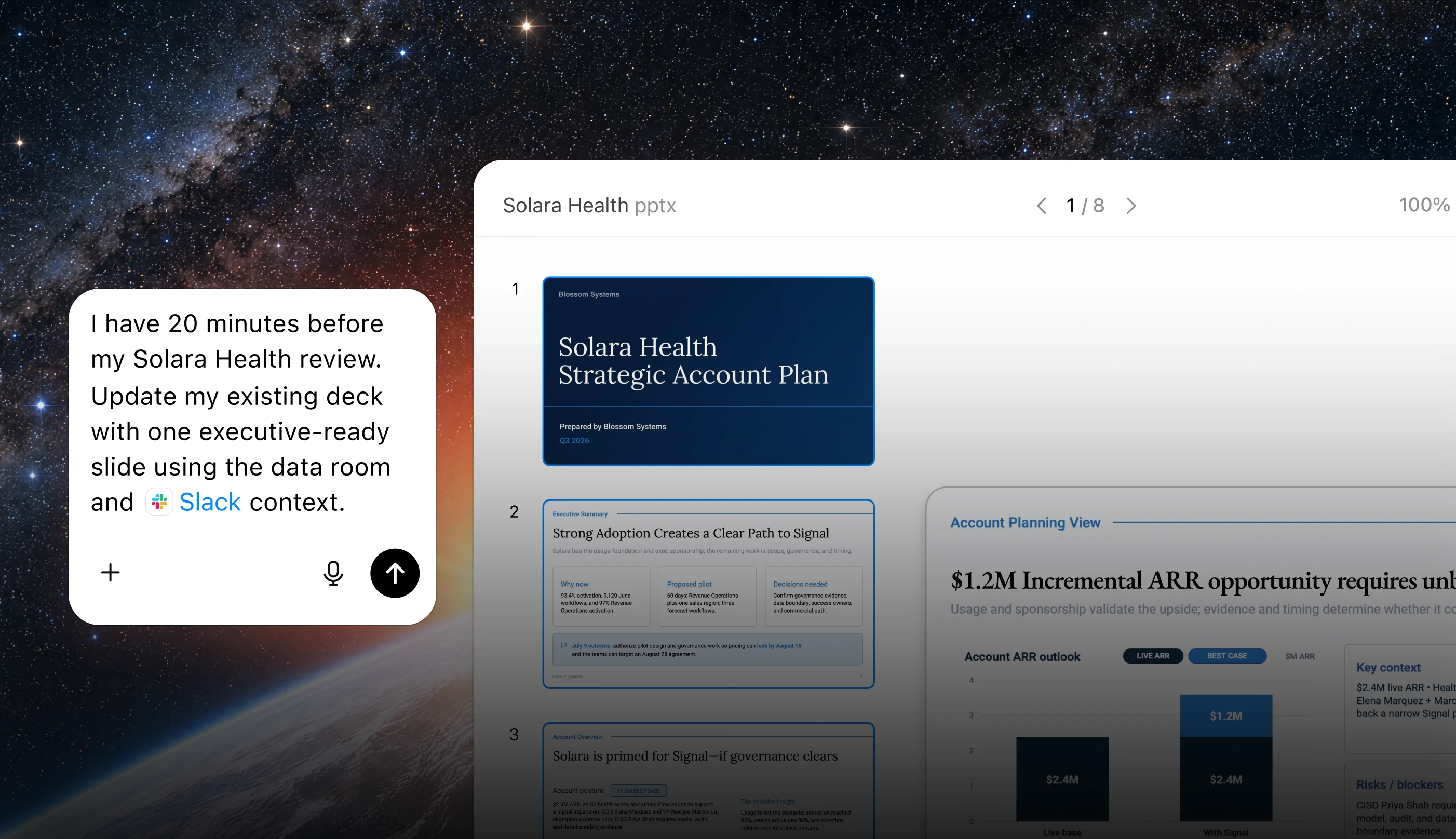
The most important part of the announcement may be ChatGPT Work. OpenAI describes it as an agent inside ChatGPT that can “take action across your apps and files,” stay with a project for hours, and turn a user’s goal into finished work. (OpenAI)
This is a meaningful product shift. Traditional ChatGPT interactions were primarily request-response: ask a question, receive an answer, refine the answer. ChatGPT Work moves closer to delegation: assign a task, let the system gather context, execute steps, ask for approval where needed, and return a completed output.
OpenAI says ChatGPT Work can create materials such as spreadsheets, slides, documents, and web apps by using information from connected apps and workflows. It can also break complex projects into smaller steps and complete them independently. (OpenAI)
That makes ChatGPT Work feel like a broader version of Codex. Codex started as a coding agent for developers, but OpenAI has already been expanding it beyond software engineering. In June, OpenAI said Codex had more than 5 million weekly active users, with knowledge workers representing around 20% of usage and growing more than three times as fast as developers. (OpenAI)
ChatGPT Work appears to formalize that direction: the Codex-style agentic workflow is no longer just for code. It is being generalized for sales, finance, operations, research, marketing, data analysis, and everyday business execution.
GPT-5.6: stronger, faster, and more agent-native
OpenAI positions GPT-5.6 as a model family optimized not only for intelligence, but also for efficiency and long-running work. The company says GPT-5.6 improves performance across coding, knowledge work, cybersecurity, science, computer use, and design.
Model
Positioning
GPT-5.6 Sol: Flagship model for the hardest reasoning, coding, science, cyber, and professional tasks
GPT-5.6 Terra: Balanced model for everyday work with lower cost
GPT-5.6 Luna: Fastest and most cost-efficient model
Codex becomes part of the larger ChatGPT platform
OpenAI also announced that the Codex app is merging with the new ChatGPT desktop app. Codex remains available as a coding agent, but it now sits alongside Chat and Work in a broader desktop experience.
This is strategically important. It suggests OpenAI wants ChatGPT to become a unified operating surface for different kinds of AI work:
- Chat for conversation, reasoning, and exploration.
- Work for business and knowledge workflows.
- Codex for software engineering and technical execution.
- Scheduled Tasks for recurring or event-driven automation.
- Sites for turning work into interactive web apps or shareable internal tools.
OpenAI says ChatGPT Work can connect to tools like Slack, Microsoft Teams, Google Drive, SharePoint, email, calendars, CRMs, project trackers, and other internal systems through plugins. Users can also reference specific connected tools with an “@” mention in the prompt.
This makes the product less like a chatbot and more like an agentic workspace.
The bigger picture: ChatGPT as an operating layer
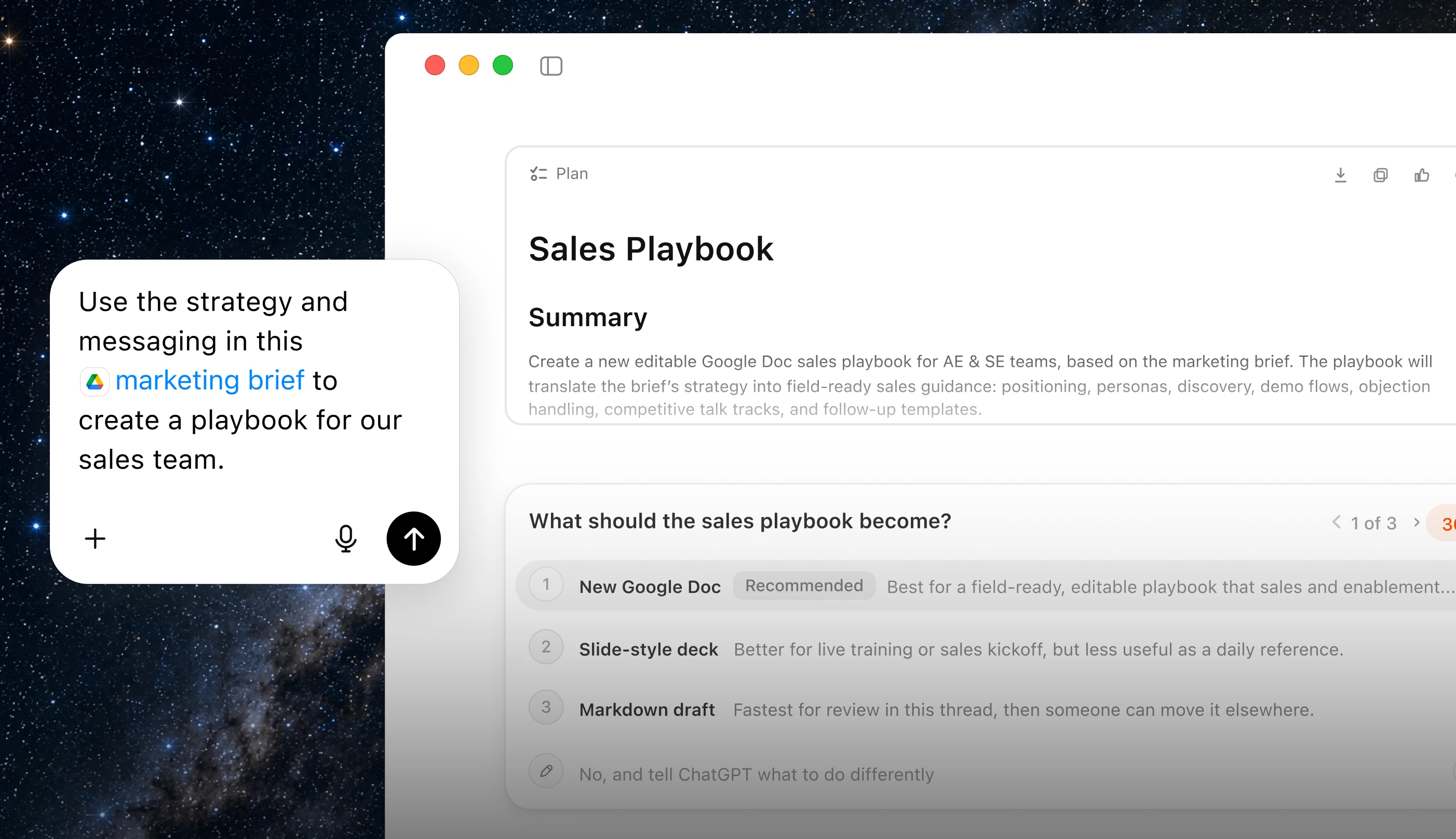
The GPT-5.6 and ChatGPT Work launch suggests a broader thesis: ChatGPT is becoming less of an app and more of an operating layer for knowledge work.
This layer can talk, reason, browse, code, use tools, generate files, modify documents, schedule recurring actions, and coordinate multiple agents. It can work with local apps, cloud tools, internal systems, and enterprise context.
That is a very different product category from the original ChatGPT.
In the first wave of AI adoption, users asked models to generate answers. In the next wave, users will ask agents to complete work. GPT-5.6 and ChatGPT Work are OpenAI’s clearest statement that this transition is already underway.
For developers, startups, and AI product teams, the lesson is clear: the future is not just bigger models. It is models embedded inside workflows, with memory, tools, permissions, execution, and accountability.